
A foreclosure sale can be one of the most difficult moments a homeowner faces. Once the property has been sold, it is natural to wonder whether there is still a way to recover the home or challenge what happened.
If you are searching for how to get your house back after foreclosure sale, the first thing to know is that there is no single answer for every homeowner in the United States. Foreclosure procedures and post-sale rights are largely affected by state law, the type of foreclosure, the documents involved, and the circumstances of the sale.
In some states, a homeowner may have a statutory right of redemption after a foreclosure sale. In other situations, a homeowner may need to investigate whether there was a legally significant problem with the foreclosure process. Cornell’s Legal Information Institute explains that redemption rights are governed by state law and that the rules differ regarding whether a right exists and how long it lasts.
What Happens to Your House After a Foreclosure Sale?
A foreclosure sale is the point at which the property is sold through the foreclosure process. What happens next can depend on the state, the type of foreclosure, the terms of the foreclosure, and whether any post-sale rights apply.
The sale can have major consequences for the homeowner, but the exact legal effect should be determined under the law governing the property.
What a Foreclosure Sale Means for Homeowners
A foreclosure sale generally means that the foreclosure process has reached the sale stage and the property has been sold according to the applicable foreclosure procedure.
For the former homeowner, this can mean that another party has acquired rights to the property. However, the precise legal effect of the sale is not identical in every jurisdiction.
Does Ownership Change After the Sale?
The legal effect of a foreclosure sale depends on the applicable law and the particular foreclosure process. For example, federal law governing certain foreclosure sales conducted under a specific federal statute provides that the purchaser becomes entitled to possession upon passage of title and expressly addresses redemption rights. That federal rule does not establish a universal rule for every foreclosure in the country.
What Happens After the Foreclosure Auction?
After the auction, the next steps can include recording or transferring the property interest, addressing possession, and following any state-specific post-sale procedures.
If you are still living in the home, do not ignore documents that arrive after the sale. Read them carefully and seek qualified legal advice if you do not understand what they require.
Can You Get Your House Back After a Foreclosure Sale?
In some circumstances, a homeowner may have a legal route to recover a property after foreclosure. But this is not guaranteed, and the available options depend heavily on state law.
One possibility is a statutory right of redemption. Cornell explains that, in some states, a mortgagor who has lost property through foreclosure may be able to recover it by exercising a redemption right, with the precise requirements determined by state law.
Another issue may involve an alleged legal or procedural error in the foreclosure. Whether such an error provides a remedy after a sale is a separate question that depends on the applicable law and facts.
When Getting Your Home Back May Be Possible
Getting a home back may be possible when the applicable law gives the former homeowner a post-sale redemption right or another legally recognized remedy.
For example, Cornell describes statutory redemption as a right recognized in some states that can allow a former homeowner to recover property after foreclosure by meeting the applicable legal requirements.
Why Foreclosure Laws Vary by State
Foreclosure law is not uniform across the United States. States can differ in how foreclosure is conducted, what notices are required, what happens after a foreclosure sale, and whether a statutory redemption period is available.
The distinction is especially important when discussing redemption. Cornell states that redemption rights are governed by state law and vary regarding whether and how long they continue after foreclosure.
Factors That Affect Your Ability to Recover the Property
Several factors may affect whether you have a possible path to recover your home.
These can include:
- The state where the property is located
- The type of foreclosure used
- The date the foreclosure sale occurred
- Whether state law provides a post-sale redemption right
- Whether a relevant deadline has passed
- Whether there was a legally significant problem with the foreclosure process
- The documents and notices connected with the foreclosure
- The current status of the property and title
Because these factors can interact, a homeowner should evaluate the actual circumstances rather than relying on a general internet claim.
How to Get Your House Back After Foreclosure Sale
If your main question is how to get your house back after foreclosure sale, start with the facts. Do not begin by paying a company that promises to recover the property. Instead, determine what happened, identify the law that applies, and find out whether any legal remedy remains available.
Check for a Right of Redemption
The first issue to investigate is whether your state provides a statutory right of redemption for your particular foreclosure.
A statutory right of redemption may allow an eligible former homeowner to recover the property after the foreclosure sale by satisfying requirements established by state law. Cornell explains that these rights vary from state to state.
Review Your Foreclosure Documents
Gather every document connected with the mortgage and foreclosure. Depending on the circumstances, this may include the mortgage or deed of trust, payment records, foreclosure notices, court documents, sale notices, correspondence with the mortgage servicer, and documents showing the date and result of the sale.
These records can help establish what happened and when. If you believe your mortgage servicer made an error, federal mortgage-servicing rules provide procedures for borrowers to submit a written notice of error or request information about their mortgage. The CFPB explains that servicers generally must respond to qualifying requests, subject to specific rules and exceptions.
Check Whether the Foreclosure Process Was Properly Followed
If you believe something went wrong, identify the specific issue. Federal mortgage-servicing regulations identify certain foreclosure-related errors, including improperly initiating a foreclosure, improperly moving for a foreclosure judgment or order of sale, or conducting a foreclosure sale in violation of specified requirements.
Find Out Whether You Can Challenge the Sale
If you believe the foreclosure involved a serious procedural or legal problem, find out whether your state’s law provides a way to challenge the sale. This is an area where timing matters. A potential legal claim can have its own procedural requirements and deadlines.
Rather than relying on a company that promises a guaranteed result, have the circumstances reviewed by a qualified attorney who practices in the state where the property is located.
Talk to a Foreclosure Attorney
A foreclosure attorney can review the documents, identify the relevant state law, and explain whether a redemption right or another legal remedy may apply.
The attorney may also be able to explain whether an alleged foreclosure error has legal significance and what deadlines may affect your situation.
If you have received legal papers or believe a deadline is approaching, the CFPB recommends considering legal assistance.
Understanding the Right of Redemption After Foreclosure
The right of redemption is an important concept for anyone researching how to get your house back after foreclosure sale. However, it is important to distinguish between different types of redemption rights.
What Is the Right of Redemption?
Cornell’s Legal Information Institute explains that the equitable right of redemption generally allows a defaulting borrower to cure the mortgage default before an absolute foreclosure, while statutory redemption can exist after foreclosure in some jurisdictions.
That distinction matters because a homeowner who has already reached the foreclosure-sale stage should not assume that the pre-sale equitable right automatically continues after the sale.
How the Redemption Process Works
Where statutory redemption is available, the homeowner generally has to satisfy the legal requirements established by the relevant jurisdiction.
Cornell explains that redemption rights may require payment of the unpaid debt and additional default-related costs, although the exact requirements depend on state law.
Because the calculation can be legally and financially significant, homeowners should confirm the exact amount and procedure rather than relying on an estimate from an unofficial source.
How Long Does the Redemption Period Last?
There is no single redemption deadline that applies to every foreclosure in the United States. Cornell specifically notes that state law determines whether redemption rights continue after foreclosure and how long those rights last.
That means you should not assume that you have a particular number of days, weeks, or months to act based on something you read about another state.
What Costs May Be Required for Redemption?
If a statutory redemption right applies, the homeowner may need to pay the amount required under the applicable law.
Depending on the jurisdiction, the amount may involve the debt and additional costs or fees recognized by law. Cornell describes redemption as potentially requiring payment of the unpaid debt and additional default-related fees.
Why Redemption Rules Depend on State Law
Redemption is one of the clearest examples of why foreclosure information must be state-specific. Some states recognize post-sale statutory redemption rights, while the rules differ regarding their duration and requirements.
The fact that a friend, relative, or homeowner in another state successfully redeemed a property does not establish that you have the same right.
Can You Challenge a Foreclosure Sale?
A homeowner may wonder whether a foreclosure sale can be challenged if something went wrong. The answer depends on the specific issue, the applicable law, and the timing of the challenge.
Common Reasons for Challenging a Foreclosure Sale
Potential issues can involve foreclosure notices, servicing errors, required procedures, or other legal requirements. Federal servicing regulations specifically recognize certain errors related to the initiation of foreclosure, seeking a foreclosure judgment or order of sale, and conducting a foreclosure sale.
Improper Notice and Procedural Errors
Foreclosure procedures can involve legally required notices and specific steps. If you believe you did not receive a required notice or that an important foreclosure procedure was not followed, keep copies of all documents and correspondence.
You can also use the CFPB’s mortgage-servicer error-resolution procedures when the issue falls within the applicable federal servicing rules.
Fraud or Other Problems With the Foreclosure
Fraud or another serious legal problem may warrant immediate review. But homeowners should avoid assuming that discovering a problem automatically invalidates the sale. Whether the problem affects the foreclosure depends on the facts and the governing law.
A qualified attorney can help determine whether the issue is legally significant and what remedy, if any, may be available.
Legal Deadlines for Challenging the Sale
Deadlines can be extremely important after foreclosure. The deadline for a particular action can depend on the type of claim, state law, court procedure, and other circumstances. There is therefore no responsible way to give one nationwide deadline for every foreclosure challenge.
What If the Foreclosure Redemption Period Has Expired?
If an applicable redemption period has expired, the former homeowner may lose that particular method of recovering the property. That does not necessarily answer every possible legal question, but it does make it especially important to determine whether another valid remedy exists.
What Options May Still Be Available?
The answer depends on the circumstances. A legal professional may examine whether there is another recognized claim or remedy, whether a foreclosure error has legal significance, or whether another issue affects the sale. There is no universal post-redemption remedy that applies to every former homeowner.
Can You Negotiate With the New Property Owner?
A former homeowner may consider communicating with the current property owner, depending on the circumstances. For example, the parties might discuss a potential purchase or another arrangement. However, the new owner’s willingness to negotiate cannot be assumed, and negotiation is not the same thing as exercising a legal redemption right.
When Legal Remedies May Still Apply
A possible legal remedy may still need to be examined even after a redemption period has ended. For example, if you believe there was a serious legal problem with the foreclosure, an attorney can determine whether the applicable law provides any remedy. The key point is that the existence of a potential error does not automatically mean the property will be returned.
When Getting the House Back May No Longer Be Possible
Unfortunately, there are situations where recovering the property may no longer be legally possible. If no redemption right applies, the applicable deadline has expired, and no other valid remedy exists, the former homeowner may not have a legal path to regain the property.
That is why it is better to determine the available options promptly rather than waiting for a company to promise a guaranteed solution.
What Should You Do Immediately After a Foreclosure Sale?
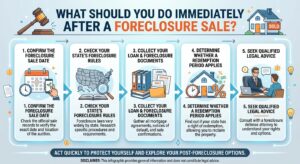
The period immediately following a foreclosure sale can be confusing. Instead of making rushed decisions, focus on establishing the facts and identifying deadlines.
Confirm the Foreclosure Sale Date
Start by confirming the exact date on which the foreclosure sale occurred. Keep the official sale notice and any other documentation showing the date and outcome. This information can be important when determining whether a statutory redemption period or another legal deadline applies.
Check Your State’s Foreclosure Rules
Next, identify the law that applies to the property. The state where the property is located is especially important because redemption and foreclosure procedures can vary by jurisdiction. Cornell confirms that redemption rights are governed by state law.
Collect Your Loan and Foreclosure Documents
Create a single file containing your mortgage paperwork, payment history, foreclosure notices, court documents, correspondence, sale information, and communications with the servicer. A complete timeline can make it easier to identify possible errors or missed deadlines.
Determine Whether a Redemption Period Applies
Find out whether your property qualifies for statutory redemption and, if so, exactly how the process works. Do not assume that every foreclosure has a redemption period. The right exists only where applicable law provides it, and the requirements vary by state.
Seek Qualified Legal Advice
If the foreclosure sale has already occurred, legal advice can be particularly valuable. A foreclosure attorney can review the relevant documents and state law. The CFPB also advises consumers facing imminent foreclosure or legal papers to consider consulting an attorney.
Read more: Modern Living Room Ideas: How to Create a Stylish and Comfortable Space in 2026
Mistakes to Avoid How to Get Your House Back After Foreclosure Sale
Trying to recover a home after foreclosure can make homeowners vulnerable to bad advice and scams.
Waiting Until a Legal Deadline Passes
Do not wait until the last possible moment to determine whether a redemption right or other remedy exists. Because deadlines vary, identify the applicable date as soon as possible.
Ignoring Foreclosure Notices
Do not throw away or ignore notices simply because the foreclosure sale has already occurred. Post-sale documents may contain important information about possession, legal proceedings, or other obligations. If you do not understand a document, seek professional advice.
Assuming All States Follow the Same Rules
A common mistake is assuming that a foreclosure rule from one state applies everywhere. Redemption rights are a good example: state law determines whether a right exists and how it operates. Always verify the law applicable to the property involved.
Trusting Unverified Foreclosure Recovery Services
Be extremely careful with companies that promise they can guarantee the return of your home. The FTC warns about mortgage-relief scams in which companies promise to help homeowners but demand upfront payments, tell them to stop communicating with their lender, or attempt to get them to transfer the deed.
Final Thoughts
If you are trying to understand how to get your house back after foreclosure sale, do not rely on a simple yes-or-no answer.
The possibility of recovering a property can depend on state law, the type of foreclosure, the date of the sale, whether a statutory redemption right applies, and whether there was a legally significant problem with the foreclosure process.
Start by confirming the foreclosure sale date, collecting your documents, checking the law applicable to your property, and determining whether a redemption right or another legal remedy may be available.
Finally, be careful about anyone promising a guaranteed way to recover your home. The FTC warns that mortgage-relief scammers may demand upfront fees, tell homeowners to stop communicating with their lender, or persuade them to transfer the deed.
FAQs About How to Get Your House Back After Foreclosure Sale
Can I get my house back after a foreclosure sale?
Possibly, depending on the applicable state law and circumstances. Some states provide statutory redemption rights after foreclosure, while other situations may involve different legal remedies.
How long do I have to redeem my house?
There is no single nationwide redemption period. If a statutory redemption right applies, the duration and requirements depend on the law governing the property.
Can a foreclosure sale be reversed?
A foreclosure sale is not automatically reversed simply because a homeowner believes something went wrong. Certain federal servicing rules address specific foreclosure-related errors, but whether an error provides a remedy depends on the facts and applicable law.
What happens after the redemption period expires?
If an applicable redemption period expires, that particular route for recovering the property may no longer be available. Whether another legal remedy exists depends on the circumstances and governing law.