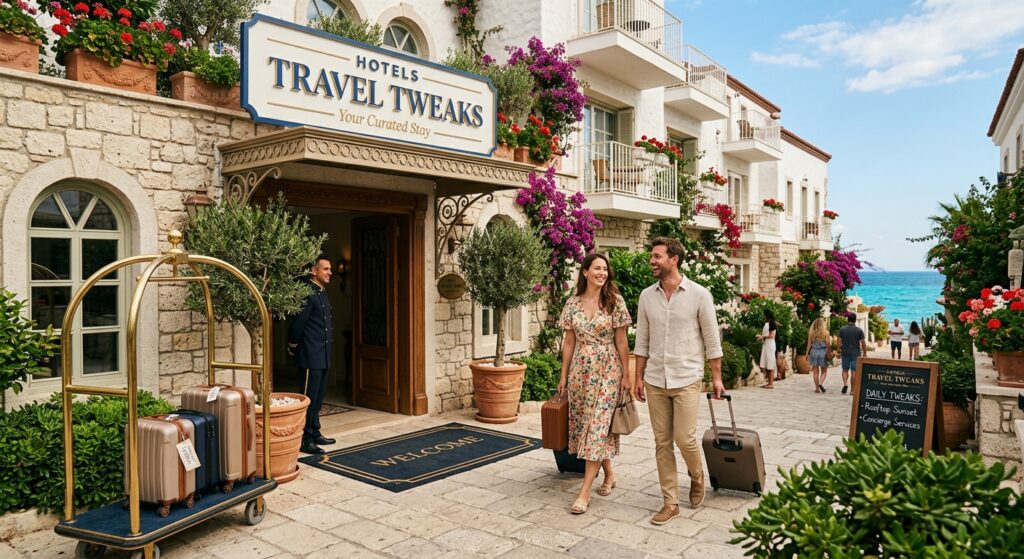

A better hotel stay often comes down to preparation rather than complicated planning. Checking a property’s location, reading recent reviews, understanding the booking terms, confirming important room requirements, and knowing what to expect at check-in can make travel decisions easier.
Hotels Travel Tweaks is a practical way to describe these small adjustments. They are not secret hotel hacks or guaranteed methods for receiving an upgrade. Instead, they are simple steps travelers can take to gather useful information, avoid preventable mistakes, and make their accommodation fit their trip more closely.
This guide covers 20 practical ideas, from researching a hotel before booking to checking your room after arrival, using available services, protecting important belongings, and preparing for checkout. Hotel policies, prices, facilities, and local laws can differ, so important details should always be confirmed with the hotel or booking provider.
What Are Hotels Travel Tweaks?
Hotels Travel Tweaks are small, practical changes to the way a traveler researches, books, prepares for, and manages a hotel stay. Examples include comparing properties, checking recent reviews, reviewing cancellation terms, confirming special requirements, checking room-safety features, and keeping reservation information accessible.
The purpose is not to make unrealistic promises about what a hotel will provide. It is to help travelers make decisions based on information that is relevant to their own trip. The U.S. Department of State recommends researching lodging, considering transportation and important services, confirming special facilities when needed, and checking safety features after arrival.
Why Small Changes Can Improve a Hotel Stay
A hotel reservation involves more than choosing a room. Travelers may need to consider location, transportation, room type, accessibility, pricing, cancellation policies, and safety.
For example, checking a map before booking can show whether a property is convenient for your itinerary. Reading several reviews can provide additional perspectives about the accommodation. Reviewing booking terms can help you understand what you have agreed to before payment.
These actions cannot guarantee a particular experience, but Hotels Travel Tweaks can make the decision-making process more informed and organized.
When to Use These Travel Tweaks
Different adjustments are useful at different stages of a trip. Before booking, concentrate on location, reviews, room details, pricing, and policies. Before arrival, confirm important requests and keep your reservation details available.
After check-in, become familiar with the room and identify the emergency exit. During the stay, communicate significant problems to hotel staff. Before departure, check your belongings and make sure you understand the checkout procedure.
Using Hotels Travel Tweaks throughout the journey makes them easier to apply without adding unnecessary complexity to your travel routine.
20 Hotels Travel Tweaks to Improve Your Stay
1. Compare Hotel Options Before Booking
Do not select a hotel only because it has the lowest advertised starting price. Compare properties using your actual travel dates and requirements.
Look at location, room type, reviews, cancellation conditions, included features, and pricing information. The Federal Trade Commission advises consumers to research travel providers and understand important information before committing to a purchase.
One of the most useful Hotels Travel Tweaks is therefore to compare the complete booking offer instead of focusing on a single headline price.
2. Check the Hotel Location
Check the hotel’s actual location before making a reservation. Consider how close it is to the places you plan to visit and what transportation options are available.
The U.S. Department of State recommends considering accommodations near public transportation and important services when appropriate.
A property that looks attractive online may not be convenient for your particular itinerary. Checking the map, surrounding area, and transportation options can help you decide whether the location works for your plans.
3. Read Recent Guest Reviews
Reviews can provide information that may not appear in a hotel’s official description. Look for recent comments and pay attention to recurring observations that are relevant to your needs.
The FTC recommends researching hotels and checking reviews or complaints before committing to a travel purchase. Reviews should still be treated as one source of information rather than a guarantee of what your own stay will be like.
Among Hotels Travel Tweaks, reading reviews is one of the easiest steps because it can be done before you make a reservation.
4. Look Beyond the Advertised Room Price
The displayed room rate may not represent every amount that could eventually be charged. Review the booking details for taxes, mandatory fees, optional services, and other applicable charges.
For covered short-term lodging transactions in the United States, the FTC’s Rule on Unfair or Deceptive Fees requires covered businesses that advertise prices to disclose the total price upfront, including applicable mandatory fees. Certain government charges and optional services are treated differently under the rule.
Because laws differ between countries, travelers should not assume that this U.S. rule applies to hotels everywhere.
5. Check What the Room Includes
Before booking, identify the features that actually matter to your trip. Depending on the property, you might care about internet access, parking, breakfast, bed arrangements, or accessibility features.
Do not assume that every room type or booking rate includes the same features. If a particular facility is important, verify it with the hotel or booking provider.
This is one of the most practical Hotels Travel Tweaks because confirming an important feature in advance can prevent an avoidable misunderstanding later.
6. Choose the Right Room Type
Hotels can offer several room categories with different bed arrangements, sizes, layouts, and features. Choose a room based on the requirements of the people traveling rather than automatically selecting the least expensive option.
A family may have different sleeping requirements from a solo traveler, while a traveler with an accessibility requirement may need a particular room feature.
The goal is not to encourage unnecessary upgrades. It is to select a room whose confirmed characteristics fit your needs.
7. Request a Suitable Room Location
If you have a legitimate room-location preference, communicate it to the property before arrival. For example, you might have a particular accessibility requirement or another specific need.
A preference is not necessarily a guarantee because room availability can change. If a particular facility is essential, confirm its availability directly with the hotel before booking.
The State Department recommends contacting accommodations before booking when special facilities are needed.
8. Confirm Check-In and Check-Out Times
Check the hotel’s stated arrival and departure times before your trip. This is especially important when your flight, train, or other transportation arrives outside the property’s normal schedule.
If you need an early arrival or later departure, contact the hotel and ask about its current policy. Availability may depend on the property and circumstances.
One of the simplest Hotels Travel Tweaks is simply knowing these times before you travel instead of discovering them at the front desk.
9. Contact the Hotel About Special Requests
If you have an important requirement, contact the hotel before arrival and explain exactly what you need.
This is particularly useful when you require a specific accessibility feature or other facility. The U.S. Department of State recommends confirming special facilities directly with the accommodation before booking.
Keep confirmation of an important request when appropriate so you can refer to the information later.
10. Keep Your Booking Information Accessible
Save your reservation confirmation, hotel contact information, dates, room details, and important booking terms somewhere that you can access easily.
The FTC advises travelers to understand important travel details before paying and to review relevant cancellation or refund terms. Keeping your records accessible can also make it easier to verify what you actually booked.
This simple Hotels Travel Tweaks habit can be useful when you need to contact the property or check your reservation during a trip.
11. Check the Room When You Arrive
After checking in, take a few minutes to become familiar with the room and its basic safety features.
The State Department recommends checking room phones, fire alarms, fire extinguishers, carbon monoxide detectors where applicable, and door and window locks. It also recommends identifying the closest emergency exit and reviewing the emergency plan.
This is an important Hotels Travel Tweaks step because it focuses on the actual room you have received rather than relying only on an online description.
12. Adjust the Room for Better Comfort
Once you have completed your basic checks, arrange the room according to your own needs. Keep frequently used items accessible and organize luggage so that you can move around comfortably.
Comfort is personal. One traveler may care about lighting or temperature, while another may simply want an organized space.
The value of Hotels Travel Tweaks here is flexibility: use the adjustments that make sense for your particular circumstances instead of following a rigid formula.
13. Reduce Unwanted Noise and Disturbances
If quiet is important to you, consider it when choosing accommodation. Recent reviews may contain comments about recurring noise concerns, although they cannot predict exactly what conditions will be like during your stay.
If you experience a continuing disturbance, explain the problem to hotel staff and ask what options are available. A room change may depend on occupancy and hotel policy.
14. Make Smart Use of Hotel Amenities
Check which amenities are actually available and determine which ones are useful for your trip.
Hotels differ in the facilities and services they provide. A particular amenity may also have specific hours, restrictions, or additional charges.
One of the useful Hotels Travel Tweaks is to verify current information rather than assuming every facility is included with every room or rate.
15. Ask Staff for Useful Local Information
Hotel staff can explain property services and may be able to provide information about nearby transportation or local services.
However, travelers should still use their own judgment and reliable information when making important decisions. A recommendation from hotel staff is not automatically a guarantee about a business, attraction, or service.
The State Department advises travelers to research destinations and lodging and remain aware of their surroundings.
16. Keep Valuables and Important Documents Secure
Passports, identification, payment cards, electronics, and other important belongings should be handled carefully while traveling.
The State Department recommends securing personal items, locking hotel doors and windows, and taking precautions with room keys. It specifically advises carrying a room key separately from a key packet displaying the room number.
Keeping important belongings secure is one of the most important Hotels Travel Tweaks because it addresses a practical part of staying away from home.
17. Plan Transportation Around the Hotel
Consider how you will travel between the hotel and the airport, station, attractions, meetings, or other destinations.
Check available transportation before you need it. The State Department recommends considering public transportation and important services when selecting accommodation.
Transportation planning can therefore be an important Hotels Travel Tweaks consideration when deciding whether a property’s location fits your itinerary.
18. Use Loyalty Benefits When Available
If you belong to a hotel loyalty program, check the current terms and benefits before relying on them.
Benefits can differ by program, membership level, property participation, and booking conditions. Do not assume that a benefit applies automatically to every reservation.
For frequent travelers, Hotels Travel Tweaks can include reviewing available membership benefits when those benefits genuinely fit the trip.
19. Report Problems Promptly
If you discover an important room or reservation problem, tell hotel staff as soon as practical.
Explain the issue clearly and give staff enough information to understand what happened. For safety concerns or suspicious activity, the State Department advises contacting the front desk immediately.
Reporting an issue during the stay gives the property an opportunity to respond while you are still there.
20. Prepare for Checkout in Advance
Before checkout, confirm your departure time and transportation arrangements. Start gathering your belongings early enough to avoid rushing.
Check drawers, closets, the bathroom, charging areas, and other places where personal items may have been left.
Preparing early is one of the simplest Hotels Travel Tweaks because it gives you time to identify forgotten belongings or clarify an issue before departure.
How to Choose the Right Hotel for Your Trip

The right hotel depends on the requirements of your particular journey. Price, location, room features, transportation, and available services can all influence the decision.
Consider Location and Transportation
Look at the hotel’s location in relation to your itinerary. Consider public transportation and access to important services. The State Department recommends considering transportation and important services when selecting lodging.
Location is therefore one of the first Hotels Travel Tweaks to consider because it affects how practical the rest of your trip may be.
Compare Amenities and Services
Make a list of the facilities you genuinely need and verify whether the property provides them. If a particular feature is essential, confirm it directly with the hotel before booking. This is especially important for accessibility requirements or other specific facilities.
Check Reviews and Ratings
Reviews can supplement information supplied by a hotel. Look for recurring comments and focus on observations that matter to your own trip. The FTC recommends researching hotels and checking reviews or complaints before committing to a travel purchase.
Consider Your Travel Budget
Compare the known total accommodation cost instead of focusing only on the initial nightly rate. For covered short-term lodging in the United States, the FTC rule requires covered businesses to disclose applicable mandatory fees in the upfront total price. Government charges and optional services can be treated differently under the rule. For international travel, check the pricing rules and booking conditions applicable to the relevant market.
Read more: Paxtraveltweaks Explained: Tips Every Traveler Should Know
Hotels Travel Tweaks for Different Types of Travelers
Travelers have different requirements, so the most useful adjustments depend on who is making the trip and why.
Hotel Tweaks for Solo Travelers
Solo travelers may want to pay particular attention to location, transportation, room security, and access to important services.
The State Department recommends researching lodging, reviewing safety features, securing belongings, and identifying emergency exits.
Hotel Tweaks for Families
Families can consider sleeping arrangements, room configuration, location, and facilities that matter to the people traveling. If a particular feature is essential, confirm it directly with the hotel before booking.
Hotel Tweaks for Business Travelers
Business travelers may need accommodation that fits their schedule and work requirements. Location, transportation, internet access, workspace, and arrival arrangements may all be relevant. If a service is essential for work, verify its availability rather than assuming it will be provided.
Hotel Tweaks for Couples
Couples may prioritize different features depending on their trip. Location, room type, comfort, privacy, and relevant amenities can all be considered.
There is no universally correct hotel setup for couples, so the best approach is to identify what both travelers actually need. These examples show why Hotels Travel Tweaks should be adapted to the traveler rather than treated as a fixed set of rules.
Common Hotel Mistakes Travelers Should Avoid
Good hotel planning also means avoiding assumptions that could cause problems later.
Booking Without Checking the Location
Do not rely only on a hotel’s name or search-result description. Check the actual location and transportation options before booking.
Ignoring Additional Charges
Review the pricing information carefully and understand which charges are mandatory and which are optional.
For covered short-term lodging in the United States, the FTC requires covered businesses to disclose applicable mandatory fees in the upfront total price.
Overlooking Hotel Policies
Read cancellation, refund, check-in, checkout, and other policies that could affect your reservation.
Waiting Too Long to Report Problems
If an important problem occurs, report it promptly rather than waiting until departure. Using Hotels Travel Tweaks as a planning method means paying attention to issues while there is still time to discuss them with hotel staff.
A Simple Hotels Travel Tweaks Checklist
A checklist can make the advice easier to apply to future trips.
Before Booking
Compare properties, check the location, read recent reviews, review room details, understand pricing information, and check relevant cancellation or refund terms.
Before Check-In
Save the reservation confirmation, confirm important requests, check arrival and departure times, and plan transportation.
During Your Stay
Check basic room-safety features, identify emergency exits, secure important belongings, use relevant hotel facilities, and report significant problems.
Before Checkout
Check drawers and other storage areas for belongings, confirm transportation, review relevant reservation information, and complete the property’s checkout procedure.
This checklist brings the main Hotels Travel Tweaks together into a simple routine that can be reused for different hotel stays.
Final Thoughts
A well-planned hotel stay starts with accurate information. Before booking, compare suitable properties, research the location, read reviews, understand pricing information, and check the policies that apply to your reservation.
Before arrival, keep your confirmation details accessible and communicate important requirements. Once you reach the property, check basic safety features, identify the emergency exit, and keep important belongings secure. During the stay, use relevant services and report significant problems promptly.
The best Hotels Travel Tweaks are not secret hacks or promises of special treatment. They are straightforward habits: research before booking, verify important details, prepare for arrival, and pay attention to your needs throughout the stay.
FAQs About Hotels Travel Tweaks
What are Hotels Travel Tweaks?
It practical actions travelers can take before, during, and after a hotel stay. They include researching properties, comparing booking information, checking room features, preparing for arrival, and managing the stay carefully.
How can hotel travel tweaks improve a stay?
They can help travelers make informed decisions and prepare for common parts of accommodation planning. They do not guarantee a particular result, but they can reduce uncertainty by encouraging travelers to check important information.
What should I check before booking a hotel?
Check the hotel’s location, recent reviews, room type, included features, pricing information, cancellation or refund terms, and any special requirements relevant to your trip. The FTC and U.S. Department of State both provide guidance supporting research before committing to travel arrangements.
How can I make my hotel room more comfortable?
Choose a room that fits your requirements, communicate important preferences in advance, organize your belongings after arrival, and report significant problems to hotel staff. You should also check basic room-safety features and identify the emergency exit after arrival.