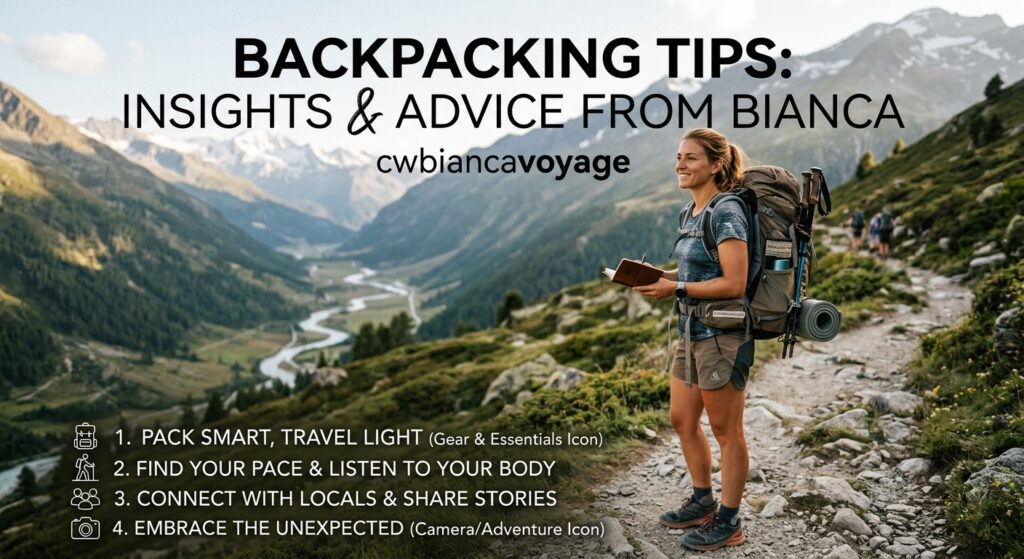

Backpacking is an exciting way to explore new destinations, experience different cultures, and discover how rewarding independent travel can be. However, a successful trip requires more than packing a bag and choosing a destination.
Beginners need to consider their budget, accommodation, transportation, essential equipment, and personal safety before leaving home. These Backpacking Tips Cwbiancavoyage From ConversationsWithBianca offer practical guidance for planning a trip with greater confidence.
Whether you are exploring a nearby destination, traveling between cities, or preparing for your first hiking adventure, the right preparation can help you avoid common mistakes and enjoy the experience.
What Are Backpacking Tips Cwbiancavoyage?
Backpacking tips are practical recommendations that help travelers prepare for journeys while carrying their essential belongings in a backpack. They cover trip planning, packing, budgeting, transportation, safety, and responsible travel.
The phrase Cwbiancavoyage is included in the requested article topic, but Backpacking Tips Cwbiancavoyage From ConversationsWithBianca should not be presented as an officially established travel method without independent verification.
Understanding the Basics of Backpacking
Backpacking can involve traveling between cities, staying in hostels, exploring unfamiliar destinations, or hiking and camping outdoors. Each style requires different preparation.
For a city trip, comfortable clothing, secure document storage, and a reliable way to navigate public transportation may be sufficient. A wilderness trip requires additional preparation, including suitable navigation tools, weather protection, food, water, and emergency equipment.
Before packing, decide where you are going, how long you will stay, and what activities you intend to enjoy. These decisions will help you identify what is genuinely necessary.
Why Backpacking Is a Great Choice for Beginners
Backpacking encourages independence, careful spending, and practical problem-solving. Travelers can organize their own schedules, compare accommodation options, and explore destinations at a comfortable pace.
Backpacking Tips Cwbiancavoyage From ConversationsWithBianca may also create opportunities to meet fellow travelers and learn about local cultures. However, backpacking is not automatically cheaper than other travel styles. Costs depend on transportation, accommodation, food, activities, and equipment.
Beginners should start with a manageable journey rather than attempting an ambitious itinerary immediately. A shorter trip provides an opportunity to learn what works and what needs improvement.
How to Start Your First Backpacking Adventure
Choose a destination that matches your budget, available time, and experience. Research transportation, accommodation, weather, and any entry requirements before making bookings.
Create a basic itinerary, prepare a packing checklist, and test your backpack before departure. For hiking trips, choose routes appropriate for your fitness and experience, and learn how to use your equipment.
Share your itinerary with someone you trust, keep important documents secure, and maintain a reserve for unexpected expenses.
How to Plan a Successful Backpacking Trip
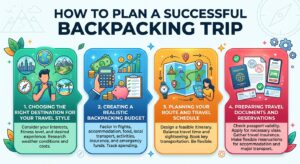
Good planning reduces unnecessary stress without making your trip overly complicated. Research your destination, compare costs, and organize the essentials before departure.
Choosing the Right Destination for Your Travel Style
Consider your interests, travel experience, budget, and preferred activities. Cities may suit travelers interested in history and culture, while established walking routes and parks may appeal to outdoor enthusiasts.
Research seasonal weather, transportation connections, accommodation availability, and local safety guidance. Official government information is particularly important for international travel.
Creating a Realistic Backpacking Budget
Include transportation, accommodation, meals, activities, communication, and necessary equipment in your budget. International travelers should also consider visas, travel insurance, and currency-related expenses where applicable.
Research actual prices for your destination and travel dates. Keep emergency money separate from your everyday spending allowance. If the trip exceeds your budget, consider shortening the itinerary or reducing optional activities rather than sacrificing essential safety measures.
Planning Your Route and Travel Schedule
Arrange your destinations in a logical order and check how long each journey takes. Allow time for meals, rest, transportation delays, and accommodation check-ins.
Avoid scheduling too many activities in one day. For outdoor trips, research terrain, route difficulty, daylight hours, and changing weather conditions. A flexible itinerary makes it easier to adjust plans when circumstances change.
Preparing Travel Documents and Reservations
Check passport validity, visa requirements, tickets, accommodation confirmations, and any permits required for your activities.
Keep secure copies of important documents separately from the originals. Confirm reservation details and cancellation conditions before departure. Requirements vary by destination and nationality, so use the relevant official government sources rather than relying exclusively on travel blogs.
Essential Backpacking Packing Tips for Beginners
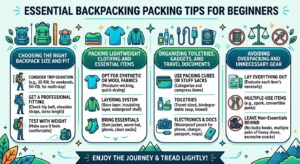
Packing efficiently means bringing everything necessary without carrying unnecessary weight. Build your packing list around your destination, activities, and expected weather.
Choosing the Right Backpack Size and Fit
Select a backpack that fits your body and accommodates your actual belongings. Adjustable straps and supportive construction can improve comfort when carrying luggage for extended periods.
Try the backpack with your intended load before traveling. Walk around and check for discomfort or poor weight distribution. A city traveler and an overnight camper will have different storage requirements, so choose equipment according to the trip rather than buying the largest available bag.
Packing Lightweight Clothing and Essential Items
Choose versatile clothing suitable for the expected conditions. Comfortable walking clothes, appropriate footwear, underwear, socks, sleepwear, and weather protection are useful starting points.
Outdoor travelers may need additional insulation, rain protection, and spare clothing. Pack according to the forecast and potential environmental changes.
Carry essential medication and basic first-aid supplies. For hiking, consider sun protection, insect repellent, adequate water, navigation equipment, and emergency supplies appropriate to the route.
Organizing Toiletries, Gadgets, and Travel Documents
Use small pouches to separate toiletries, electronic accessories, documents, and personal items. Keep frequently used belongings accessible and protect sensitive documents.
A phone can assist with navigation and communication, but remote travelers should prepare for weak signals or a depleted battery. Consider offline maps and backup navigation tools when appropriate. Store copies of essential documents securely so that losing one bag does not leave you without important information.
Avoiding Overpacking and Unnecessary Gear
Review everything before placing Backpacking Tips Cwbiancavoyage From ConversationsWithBianca in your backpack. Remove duplicate items, unnecessary electronics, and clothing that does not suit your itinerary. Do not reduce weight by removing essential safety equipment. The objective is to carry the right items for your destination, not simply the smallest possible load.
Smart Budget Backpacking Tips to Save Money
Budget planning helps travelers enjoy more experiences without losing control of their spending.
Finding Affordable Hostels and Accommodation
Compare hostels, guesthouses, budget hotels, and other suitable accommodation options. Consider location, cleanliness, security, cancellation policies, and transportation access alongside the nightly price.
A cheaper room far from the places you want to visit may increase your overall expenses. Read recent reviews and confirm essential facilities before booking.
Saving Money on Food and Transportation
Compare public transportation options, advance tickets, and available travel passes. Walking may be a practical choice for short distances when routes are safe and accessible.
Where suitable, buy groceries or prepare simple meals instead of eating at restaurants for every meal. Follow local food and drinking-water safety advice. Avoid choosing transportation based on price alone when reliability, arrival time, and personal safety are important considerations.
Tracking Daily Expenses During Your Trip
Record accommodation, food, transportation, activities, and miscellaneous purchases in a notebook or budgeting app. Review your spending regularly and compare Backpacking Tips Cwbiancavoyage From ConversationsWithBianca with your original estimate. Adjust optional activities if costs begin to rise faster than expected. Remember to account for laundry, baggage fees, equipment replacement, and unexpected overnight stays.
Exploring Free Attractions and Budget-Friendly Activities
Public parks, walking routes, historic neighborhoods, and some cultural attractions may provide affordable ways to explore a destination. Check official attraction information for admission fees, opening times, and reservation requirements. Respect access restrictions and local rules.
Backpacking Safety Tips for First-Time Travelers
Safety preparation should be part of every trip, whether you are exploring a city or hiking in a remote area.
Keeping Cash, Passports, and Valuables Secure
Avoid displaying large amounts of cash or carrying all your payment methods in one place. Keep important documents secure and maintain separate copies.
Use accommodation storage facilities where appropriate, and remain aware of your belongings in crowded transportation areas. If your passport is lost abroad, contact the appropriate authorities and your country’s embassy or consulate for guidance.
Staying Safe in Unfamiliar Destinations
Research local conditions, transportation options, emergency contacts, and destination-specific warnings before departure.
Use reliable transportation providers and tell someone you trust about significant itinerary changes. For hiking, choose routes suited to your experience and avoid continuing when conditions become unsafe.
Preparing for Emergencies and Unexpected Delays
Carry emergency contact details, essential medication, suitable first-aid supplies, and enough reserve money for foreseeable disruptions.
Outdoor travelers should also prepare for weather changes, limited mobile coverage, and unexpected route delays. The National Park Service recommends carrying appropriate navigation, illumination, food, water, and emergency equipment.
Review travel insurance conditions if you purchase a policy, including exclusions and medical or evacuation coverage.
Understanding Local Laws and Cultural Traditions
Research local laws, photography restrictions, dress expectations, and rules for religious or protected sites.
Ask permission before photographing people and respect restrictions on camping, fires, wildlife, and waste disposal. Responsible behavior helps protect both local communities and natural environments.
How to Choose the Best Backpacking Gear
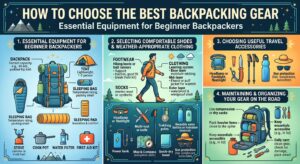
Useful gear should match the destination, season, and activities. Beginners do not need to purchase every item marketed to travelers.
Essential Equipment for Beginner Backpackers
For general travel, consider a suitable backpack, comfortable shoes, weather-appropriate clothing, toiletries, document storage, charging equipment, and a small first-aid kit.
Hiking and camping may require navigation tools, a headlamp, sun protection, extra food and water, weather protection, and emergency shelter. The National Park Service’s outdoor safety guidance provides a useful starting point for identifying essential hiking equipment.
Selecting Comfortable Shoes and Weather-Appropriate Clothing
Choose footwear suitable for your route. Comfortable walking shoes may work for paved paths, while uneven terrain may require more supportive hiking footwear.
Test shoes before departure and choose clothing that suits expected temperatures and precipitation. For outdoor trips, prepare for conditions that may differ from the forecast at your starting point.
Choosing Useful Travel Accessories
Consider practical items such as a reusable water bottle, power bank, travel adapter, laundry bag, toiletry organizer, or compact document pouch.
For wilderness trips, navigation backups and appropriate emergency equipment should take priority over nonessential accessories. Borrowing or renting specialized equipment can be a useful alternative to buying everything before your first trip.
Maintaining and Organizing Your Gear on the Road
Keep your belongings organized and inspect frequently used equipment for damage. Dry wet items when conditions permit and keep essential supplies accessible. Before outdoor activities, confirm that your equipment works properly and that you know how to use Backpacking Tips Cwbiancavoyage From ConversationsWithBianca.
Common Backpacking Mistakes and How to Avoid Them
Carrying Too Much Luggage
Packing too many items increases the load you must manage. Prepare a checklist, remove duplicates, and test your backpack before leaving. Keep necessary safety supplies even when traveling light.
Underestimating Travel Costs
Include daily expenses and one-time costs in your budget. Research current prices, account for transport and activity fees, and keep a reserve for unexpected situations.
Following an Overly Complicated Itinerary
Trying to visit too many places can create unnecessary pressure. Prioritize your main activities, allow time for travel, and keep the schedule flexible.
For hiking, choose routes that match your abilities and the available daylight.
Ignoring Weather Forecasts and Safety Precautions
Check reliable weather information before outdoor activities and monitor updates when conditions may change.
Bring appropriate clothing and equipment, follow local warnings, and postpone activities when conditions exceed your experience or preparation.
Read more: Abode Home Security Systems: Features, Pricing, Installation, and Review
How to Make Your Backpacking Journey More Enjoyable
Meeting Fellow Travelers and Connecting With Local Communities
Shared accommodation, guided activities, and community events can create opportunities to meet people.
Respect personal boundaries, protect your private information, and research unfamiliar activities before participating. Ask permission before taking photographs of local residents.
Staying Flexible When Travel Plans Change
Transportation delays, weather, and changing circumstances can affect any itinerary. Keep important bookings accessible, understand cancellation policies, and identify alternatives where practical.
Changing your plans when necessary can prevent a minor disruption from becoming a larger problem.
Respecting Local Culture and Protecting the Environment
Follow local rules, stay on permitted routes, dispose of waste responsibly, and avoid disturbing wildlife.
Respect cultural traditions and support local businesses where practical. Check the specific rules of parks and protected areas before visiting.
Documenting Your Travel Experiences and Memories
Use photographs, journals, or daily notes to preserve meaningful moments and useful travel information.
Back up important files when possible and avoid sharing sensitive live-location information publicly. Remember to enjoy your surroundings rather than focusing exclusively on documenting them.
Final Thoughts
Backpacking Tips Cwbiancavoyage From ConversationsWithBianca can be a rewarding way to explore unfamiliar places, learn practical skills, and experience travel at your own pace. Beginners can make their first journey more manageable by planning carefully, packing thoughtfully, and understanding the risks associated with their chosen activities.
Start with a realistic destination and budget, organize essential documents, select suitable equipment, and leave room for unexpected changes. Respect local communities and the environment throughout your journey.
The most valuable backpacking tips are those that help you travel confidently without making the experience unnecessarily complicated. Learn from every trip and use those lessons to prepare for the next adventure.
FAQs About Backpacking Tips Cwbiancavoyage From ConversationsWithBianca
1. What Are the Best Backpacking Tips for Beginners?
Start with a manageable destination, research your route, prepare a realistic budget, and pack only what you need. Protect your documents, understand local safety guidance, and share your itinerary with someone you trust.
2. What Should You Pack for Your First Backpacking Trip?
Bring suitable clothing, comfortable footwear, toiletries, essential medication, travel documents, charging equipment, and payment methods.
3. How Much Money Should You Budget for Backpacking?
Your budget depends on the destination, duration, accommodation, transport, and activities. Research actual prices and include an emergency reserve rather than relying on a universal daily estimate.
4. How Can Beginners Stay Safe While Backpacking?
Research local conditions, use reliable transportation, secure valuables, and keep emergency contacts available.
5. How Can You Enjoy Backpacking While Saving Money?
Compare accommodation and transportation prices, track daily spending, prepare some meals where practical, and explore free attractions.