

Thailand is a popular Southeast Asian destination known for its tropical beaches, islands, historic temples, mountain scenery, traditional markets, and lively cities. From Bangkok and Phuket to Chiang Mai, the country offers a variety of travel experiences.
Choosing the right travel dates is important because weather conditions vary across Thailand. November to February is generally a popular time to visit northern and central regions, while the Andaman coast and Gulf of Thailand have different rainfall patterns.
The best time to visit Thailand depends on your destination, budget, and planned activities. Understanding regional weather differences can help you choose suitable dates, prepare for rainfall, and enjoy sightseeing, beaches, and cultural experiences.
What Is the Best Time to Visit Thailand?
November to February is generally one of the most popular periods to visit Thailand. During these months, northern and central Thailand usually experience relatively comfortable temperatures compared with the hotter months. Rainfall is also generally lower across much of the country.
Bangkok, Chiang Mai, Ayutthaya, and other inland destinations are popular during this period. Visitors can explore temples, historical sites, markets, national parks, and outdoor attractions without experiencing the same level of heat commonly associated with April and May.
However, southern Thailand requires more careful planning because its two main coastal regions experience different rainfall patterns.
- Phuket, Krabi, and the Phi Phi Islands: November to April is generally favorable for beach holidays along the Andaman coast.
- Koh Samui, Koh Phangan, and Koh Tao: February to August is generally a useful period to consider, although local weather varies. October to December is commonly wetter.
- Bangkok and central Thailand: November to February generally offers more comfortable sightseeing conditions.
- Chiang Mai and northern Thailand: November to January is often suitable for outdoor exploration, although seasonal air pollution becomes an important consideration later in the dry season.
Ultimately, the best time to visit Thailand depends on the places you want to explore. Instead of choosing one month for the entire country, compare the seasonal conditions of your intended destinations.
Understanding Thailand’s Weather and Climate
Thailand has a tropical climate influenced by seasonal monsoon winds. Warm temperatures and humidity are common throughout much of the year, but rainfall, temperature, and wind conditions differ between regions.
The country’s geography also affects local weather. Northern Thailand has mountainous areas that can experience cooler conditions, while southern Thailand has coastal destinations influenced by the Andaman Sea and the Gulf of Thailand.
Thailand’s Tropical Climate
The Best Time to Visit Thailand depends partly on regional weather conditions. Thailand has warm tropical weather throughout the year, but northern areas such as Chiang Mai can have cooler mornings, while Bangkok and coastal destinations are generally warmer and humid. Visitors should wear light clothing, drink enough water, and take breaks during hot weather.
Average Temperature and Rainfall
Thailand’s hot season generally runs from mid-February to mid-May, with April often being the hottest month. The rainy season usually lasts from mid-May to mid-October, although rainfall varies by region. Koh Samui and nearby Gulf islands often receive heavier rain toward the end of the year.
How Monsoon Winds Affect Thailand’s Weather
Two major monsoon systems influence Thailand’s weather:
- Southwest monsoon: Usually brings moisture and rainfall from mid-May to mid-October, particularly to western coastal areas.
- Northeast monsoon: Generally brings cooler, drier conditions to northern and central Thailand from mid-October to mid-February, but can cause heavy rain along the Gulf coast.
Monsoon timing can change each year, so check local weather forecasts before travelling.
Regional Weather Differences
Thailand’s regions have different weather characteristics, so choosing destinations according to local conditions is important.
- Northern Thailand: Generally cooler from November to February, with seasonal haze possible later in the dry season.
- Central Thailand: Warm throughout the year, with generally more comfortable sightseeing conditions from November to February.
- Andaman coast: Phuket and Krabi generally experience wetter weather during the southwest monsoon months.
- Gulf coast: Koh Samui and nearby islands commonly receive heavier rainfall between October and December.
- Eastern Thailand: Pattaya and Koh Chang experience their own seasonal rainfall patterns, which should be considered separately.
These differences help explain why the Best time to visit Thailand is not necessarily the same for every destination.
Thailand’s Three Main Seasons
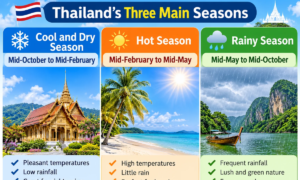
Thailand is generally divided into three main seasons: the cool or winter season, the hot season, and the rainy season. These categories are particularly useful when planning trips to northern, northeastern, and central Thailand.
Cool and Dry Season (Mid-October to Mid-February)
This season brings more comfortable weather to much of northern and central Thailand, making it popular for sightseeing and outdoor activities. Chiang Mai, Bangkok, and Ayutthaya are popular destinations. Phuket and Krabi also generally have favorable beach conditions, while Koh Samui may experience heavy rain in October and November. December and January are busy, so booking accommodation early is recommended.
Hot Season (Mid-February to Mid-May)
Temperatures rise during this season, with April often being the hottest month. Plan outdoor activities for early morning or late afternoon, especially in Bangkok and inland areas. Songkran, Thailand’s New Year celebration, takes place from April 13 to 15. Wear light clothing, use sunscreen, and stay hydrated.
Rainy Season (Mid-May to Mid-October)
The southwest monsoon brings increased rainfall, thunderstorms, and occasional heavy showers. Rain may be brief in some areas but prolonged in others. Lush landscapes and lower accommodation prices can make this season appealing, but heavy rain may disrupt boat trips, hiking, and outdoor activities. The Andaman coast generally receives more monsoon rain than the Gulf islands, so check local conditions before planning a beach holiday.
Best Time to Visit Thailand Month by Month
Every month offers a different travel experience in Thailand. Some months are better suited to sightseeing and beach holidays, while others are more suitable for cultural activities, nature exploration, or travelers looking for quieter destinations.
The following guide describes typical seasonal patterns rather than guaranteed weather conditions.
January
- Generally comfortable weather in northern and central Thailand.
- Bangkok often experiences relatively dry conditions.
- Chiang Mai is suitable for sightseeing and outdoor activities.
- Ayutthaya is popular for exploring historical attractions.
- Phuket generally has favorable beach weather.
- Krabi and Phi Phi are popular for island excursions.
- Snorkeling and outdoor markets are popular activities.
- Koh Samui may still experience rainfall, so check local forecasts.
February
- Generally a favorable month for visiting much of Thailand.
- Northern and central regions usually remain relatively comfortable.
- Temperatures begin rising toward the end of the month.
- Phuket and Krabi are popular for beach holidays.
- Swimming and boat excursions are common activities.
- Gulf destinations may also offer suitable travel conditions.
- Seasonal haze can affect northern Thailand.
- Check air-quality reports before outdoor activities in Chiang Mai and Chiang Rai.
March
- Temperatures increase across much of Thailand.
- Bangkok can become particularly hot during the afternoon.
- Inland destinations may feel uncomfortable in the heat.
- Phuket and Krabi can still offer suitable beach conditions.
- Northern Thailand may experience seasonal smoke and haze.
- Check air-quality reports before visiting mountain areas.
- Plan sightseeing for early mornings or late afternoons.
- Stay hydrated during outdoor activities.
April
- April is generally one of Thailand’s hottest months.
- High temperatures and humidity can make sightseeing challenging.
- Bangkok can become especially hot during the afternoon.
- Songkran celebrates the traditional Thai New Year.
- The main festival dates are April 13–15.
- Bangkok and Chiang Mai host popular celebrations.
- Wear lightweight clothing and use sunscreen.
- Drink enough water and avoid prolonged exposure to midday heat.
May
- May is a transition month between the hot and rainy seasons.
- Temperatures generally remain high.
- Rainfall begins increasing as the southwest monsoon develops.
- Phuket and Krabi may experience wetter conditions.
- Sea conditions can become less predictable along the Andaman coast.
- Koh Samui may offer an alternative beach destination.
- Tourist crowds may be lower in some destinations.
- Keep your itinerary flexible because rainfall can affect outdoor plans.
June
- June falls within the rainy season across much of Thailand.
- Bangkok may experience regular showers.
- Northern destinations can also receive rainfall.
- Andaman coastal waters may become rougher.
- Boat excursions can be affected by changing sea conditions.
- Koh Samui may have comparatively favorable weather.
- Museums and shopping centers are useful rainy-day alternatives.
- Check local forecasts before planning outdoor activities.
July
- Monsoon rainfall continues across many parts of Thailand.
- Countryside landscapes become greener.
- Waterfalls may become more impressive after rainfall.
- National parks can attract nature lovers when conditions are safe.
- Heavy rain may affect hiking trails.
- Some parks and attractions may close temporarily.
- Gulf islands may be worth considering for beach holidays.
- Check weather and transportation updates before travelling.
August
- August is generally wet in several parts of Thailand.
- Bangkok may experience frequent heavy showers.
- Northern Thailand can also receive substantial rainfall.
- Phuket and Krabi may have rough sea conditions.
- Boat trips can be disrupted by bad weather.
- Koh Samui may be comparatively drier during parts of the month.
- Keep alternative indoor activities in your travel plan.
- No destination is guaranteed to remain dry throughout August.
September
- September is often among the wettest months in several regions.
- Phuket and Krabi may experience substantial rainfall.
- Rough seas can affect island transportation.
- Snorkeling and boat excursions may be disrupted.
- Swimming conditions can become unsafe during rough weather.
- Koh Samui may receive less rain than some Andaman destinations.
- Follow local beach warnings and ferry updates.
- Keep your travel schedule flexible.
October
- October is a transition month between monsoon patterns.
- The southwest monsoon gradually weakens across much of Thailand.
- Northern areas may begin experiencing improving conditions.
- Central Thailand can still receive rainfall.
- Phuket and Krabi may have changing weather.
- The Gulf coast can become wetter as the northeast monsoon develops.
- Check regional forecasts before booking island excursions.
- Do not assume that all of Thailand is dry in October.
November
- November is generally favorable for northern and central Thailand.
- Bangkok often experiences more comfortable weather.
- Chiang Mai is popular for sightseeing.
- Phuket and Krabi begin entering their popular beach season.
- The Andaman coast generally becomes more suitable for island trips.
- Loy Krathong is celebrated according to the lunar calendar.
- Koh Samui may experience substantial rainfall.
- Check Gulf coast weather before booking a beach holiday.
December
- December is one of Thailand’s most popular travel months.
- Northern Thailand generally experiences comfortable weather.
- Bangkok is suitable for outdoor sightseeing.
- Chiang Mai attracts visitors exploring temples and markets.
- Phuket is popular for beach holidays.
- Krabi offers opportunities for island excursions.
- Koh Samui may still receive considerable rainfall.
- Christmas and New Year increase demand, so book accommodation early.
Best Time to Visit Thailand by Region
Thailand’s weather varies across different regions throughout the year. Choosing the right destination and travel season can make your holiday more comfortable. Northern, central, and southern Thailand experience different rainfall patterns. Consider the local climate before booking your trip.
Bangkok and Central Thailand
November to February is generally a comfortable period to explore Bangkok and central Thailand. Visitors can enjoy the Grand Palace, Wat Arun, museums, temples, and traditional markets. Ayutthaya is another popular destination for exploring Thailand’s historical ruins. March to May is hotter, while the rainy season may bring heavy showers and occasional flooding.
Chiang Mai and Northern Thailand
November to January is generally a comfortable time to visit Chiang Mai and northern Thailand, making it a popular period when considering the Best Time to Visit Thailand. Popular attractions include Doi Suthep, historic temples, traditional markets, and nearby mountains. However, February to April can bring seasonal haze and air pollution, so check local air-quality reports before traveling.
Phuket and the Andaman Coast
November to April is generally favorable for visiting Phuket and the Andaman coast. Popular attractions include Patong Beach, Kata Beach, Krabi, and nearby islands. From May to October, the southwest monsoon can bring heavy rain, strong waves, and rough seas, affecting swimming and boat trips.
Krabi and Phi Phi Islands
November to April is generally a favorable period for visiting Krabi and the Phi Phi Islands. Travelers can explore Railay Beach, Ao Nang, limestone cliffs, and scenic island areas. During the rainy season, rough seas and heavy showers may affect boat trips and outdoor activities.
Koh Samui and the Gulf Islands
Koh Samui, Koh Phangan, and Koh Tao experience different rainfall patterns from Phuket and Krabi. February to August is generally a useful period to consider, while October to December is often wetter. Check local weather forecasts and ferry schedules before arranging island activities.
Pattaya and Eastern Thailand
November to February generally offers comfortable conditions for visiting Pattaya and eastern Thailand. Visitors can explore Pattaya Beach, Jomtien Beach, local markets, and nearby islands. Koh Chang and other eastern islands may experience substantial rainfall during the southwest monsoon season.
Andaman Sea vs. Gulf of Thailand
The Best Time to Visit Thailand depends on the weather patterns of its southern coastal regions. Thailand has two major coastal areas with different seasonal conditions. The Andaman coast includes Phuket, Krabi, and the Phi Phi Islands, while the Gulf coast features Koh Samui, Koh Phangan, and Koh Tao. Understanding these differences helps travelers choose suitable beach destinations.
Best Time to Visit the Andaman Coast
November to April is generally favorable for visiting the Andaman coast. Travelers can enjoy beaches, snorkeling, swimming, and island excursions when sea conditions permit. May to October brings the southwest monsoon, which can cause heavy rainfall and rough seas.
Best Time to Visit the Gulf Coast
February to August is generally a useful period for visiting Koh Samui, Koh Phangan, and Koh Tao. October to December is commonly wetter, with November often receiving substantial rainfall on Koh Samui. Check local forecasts before booking beach holidays and boat trips.
Weather and Rainfall Differences
The Andaman coast generally experiences wetter conditions from May to October. The Gulf coast commonly receives heavier rainfall from October to December. Therefore, Koh Samui may be worth considering in July, while Phuket and Krabi are generally popular choices in January.
Read more: Backpacking Advice Cwbiancavoyage: How to Travel Light and Explore More
Best Time to Visit Thailand for Different Activities
The best travel season also depends on your planned activities. Beach holidays, diving, hiking, and sightseeing require different weather conditions. Some destinations are more suitable during particular months. Consider local weather and safety conditions before booking activities.
Beach Holidays and Swimming
November to April is generally favorable for beach holidays in Phuket, Krabi, and the Phi Phi Islands. February to August is worth considering for Koh Samui, Koh Phangan, and Koh Tao. Always check beach warning flags, strong currents, and sea conditions before swimming.
Island Hopping and Boat Trips
November to April generally offers favorable conditions for many Andaman Sea boat trips. February to August is a useful period to consider for Gulf island excursions. Heavy rain and rough seas may cause delays or cancellations, so check ferry schedules before traveling.
Snorkeling and Scuba Diving
The Similan Islands are popular marine destinations in the Andaman Sea, while Koh Tao is well known for diving. Water visibility depends on rainfall, currents, weather, and sea conditions. Check marine park closures and choose reputable diving operators before booking.
Hiking and Nature Exploration
November to February is generally comfortable for hiking in northern Thailand, making it a popular period when considering the Best Time to Visit Thailand. The rainy season brings greener landscapes and flowing waterfalls, but heavy rainfall can make trails slippery. Check local weather warnings and national park announcements before outdoor activities.
Shopping and City Sightseeing
Bangkok, Chiang Mai, and Pattaya offer shopping and cultural attractions throughout the year. November to February is generally more comfortable for outdoor markets, temples, and walking tours. During hot or rainy weather, visitors can explore museums, shopping malls, and restaurants.
Wildlife and National Park Visits
Thailand has many national parks, forests, wetlands, and marine protected areas. Cooler months are often suitable for inland exploration, while the rainy season creates greener landscapes. Wildlife sightings are never guaranteed, and some parks have seasonal closures.
Best Festivals and Cultural Events in Thailand

Thailand celebrates several cultural festivals throughout the year, offering opportunities to experience local traditions, food, and religious practices. The Best Time to Visit Thailand may also depend on which festivals you want to enjoy. Some festivals follow lunar calendars, so their dates change annually. Check official announcements before planning your visit.
Songkran Water Festival
Songkran is Thailand’s traditional New Year celebration, observed from April 13 to April 15. The festival includes family gatherings, temple visits, traditional ceremonies, and public water celebrations. Bangkok and Chiang Mai are popular places to experience the festivities.
Loy Krathong Festival
Loy Krathong is usually celebrated in November on the full moon of the twelfth Thai lunar month. People place decorated floating offerings called krathongs on suitable waterways. Sukhothai, Bangkok, and Chiang Mai are well-known celebration destinations.
Yi Peng Lantern Festival
Yi Peng is particularly associated with Chiang Mai and takes place around the same period as Loy Krathong. The celebration features lantern displays, religious ceremonies, and cultural activities. Check local regulations and official event arrangements before attending lantern-release events.
Chinese New Year Celebrations
Chinese New Year usually falls in January or February according to the Chinese lunisolar calendar. Visitors can experience traditional food, decorations, performances, and community celebrations. Bangkok’s Yaowarat neighborhood is a popular place to enjoy the festive atmosphere.
Cheapest Time to Visit Thailand
Travel costs depend on your destination, travel dates, accommodation, and seasonal demand. The Best Time to Visit Thailand can also influence hotel prices and travel expenses. Some months may offer lower hotel prices and promotional packages. However, there is no guaranteed cheapest month throughout Thailand, so compare prices and weather conditions before booking.
Low Season and Travel Savings
May to October is generally a lower-demand period in several monsoon-affected destinations. Some hotels and tour operators may offer discounted rates during this time. However, rainfall can affect sightseeing, boat trips, and transportation.
Shoulder Season and Fewer Crowds
Shoulder seasons can offer a balance between visitor numbers, accommodation prices, and weather conditions. The timing varies between the Andaman coast and Gulf islands. Compare local hotel rates and seasonal weather before choosing your dates.
When Flights and Hotels Cost More
Flight and hotel prices often increase during Christmas, New Year, Songkran, and school holidays. Prices also depend on demand, availability, and booking dates. Booking early can provide more accommodation and flight choices during busy periods.
When Is the Worst Time to Visit Thailand?
There is no single month that is universally the worst time to visit Thailand. Weather conditions vary between regions and seasons, so choosing the Best Time to Visit Thailand depends on your travel preferences. Heavy rain, extreme heat, air pollution, and rough seas can affect particular activities. Choose your travel dates according to your destination and planned activities.
Heavy Rainfall and Possible Flooding
Monsoon rainfall can cause flooding, road closures, and transportation delays. Mountainous areas may also experience landslides and flash floods. Follow local weather warnings and avoid unsafe rivers, trails, and flooded roads.
Extreme Heat During the Hot Season
March to May can bring high temperatures across much of Thailand, with April generally being the hottest month. Heat and humidity can make outdoor sightseeing uncomfortable. Drink enough water, use sun protection, and avoid prolonged midday exposure.
Seasonal Haze and Air Pollution
Northern Thailand can experience seasonal air pollution, particularly from February to April. Agricultural burning and forest fires can contribute to haze and fine-particle pollution. Check local air-quality reports before visiting Chiang Mai and nearby provinces.
Rough Seas and Ferry Disruptions
Monsoon conditions can create rough seas along parts of Thailand’s coastline. Strong waves and currents may affect swimming, snorkeling, and ferry services. Check beach warnings and transportation updates before arranging boat trips.
Essential Travel Tips for Visiting Thailand
Proper preparation can make your Thailand holiday more comfortable. Choosing the Best Time to Visit Thailand on your destination, weather conditions, and planned activities. Check official travel and weather updates regularly. Keep your itinerary flexible to manage unexpected changes.
Choose Travel Dates Based on Your Destination
November to April is generally favorable for Phuket and Krabi. February to August is worth considering for Koh Samui and nearby Gulf islands. Northern Thailand is often more comfortable from November to January, although later dry-season air pollution should also be considered.
Check Weather and Air Quality Forecasts
Check the Thai Meteorological Department’s weather forecasts before traveling. Monitor rainfall, temperatures, thunderstorms, and coastal conditions. Northern Thailand visitors should also check air-quality reports, particularly from February to April.
Pack Suitable Clothing
Pack lightweight clothing, comfortable shoes, sunglasses, sunscreen, and insect repellent when planning the Best Time to Visit Thailand. Carry a rain jacket or compact umbrella, especially during the rainy season. Modest clothing is useful for temple visits, while a light jacket may help in cooler northern mountain areas.
Book Flights and Accommodation in Advance
Popular destinations become busy during festivals, public holidays, and international vacation periods. Booking flights and hotels early can provide more choices. Compare prices, locations, facilities, and cancellation policies before reserving.
Prepare for Rain and Weather Changes
Carry rain protection even when traveling during relatively dry months. Keep your itinerary flexible because heavy rainfall may affect boat trips and outdoor activities. Consider indoor attractions as alternatives during bad weather.
Check Local Travel Restrictions and Park Closures
Some national parks, beaches, trails, and marine attractions have seasonal restrictions or temporary closures. Check announcements from Thailand’s Department of National Parks, Wildlife and Plant Conservation before visiting. This is particularly important when planning trips to marine parks and remote natural areas.
Final Thoughts
Thailand offers beaches, cultural festivals, historic attractions, and mountain landscapes throughout the year. November to February is generally a popular period for exploring northern and central Thailand because temperatures are often more comfortable.
However, southern Thailand has different rainfall patterns along the Andaman coast and Gulf of Thailand. The hot season offers opportunities to experience Songkran, while the rainy season may bring greener landscapes and lower prices in some destinations.
Ultimately, the Best time to visit Thailand depends on your preferred destinations, activities, budget, and tolerance for heat or rain. Check regional weather forecasts and plan your trip accordingly.
FAQs About Best Time to Visit Thailand
What Is the Best Month to Visit Thailand?
January is generally a good month for exploring northern and central Thailand. Phuket and Krabi are also popular, although Koh Samui may receive rainfall.
Is November a Good Time to Visit Thailand?
Yes. November is generally favorable for Bangkok, Chiang Mai, Phuket, and Krabi. However, Koh Samui can experience substantial rainfall.
Is Thailand Worth Visiting During the Rainy Season?
Yes. Travelers may enjoy greener landscapes, fewer crowds in some destinations, and lower accommodation prices. However, heavy rain can affect transportation and outdoor activities.
What Is the Cheapest Month to Visit Thailand?
There is no guaranteed cheapest month. May to October may offer lower prices in some destinations, depending on demand and weather.
What Is the Hottest Month in Thailand?
April is generally the hottest month across much of Thailand. High temperatures and humidity can make outdoor activities uncomfortable.
Which Part of Thailand Has the Best Weather?
No region has the best weather throughout the year. Northern and central Thailand are generally more comfortable from November to February, while the southern coasts have different rainfall patterns.
Is December a Good Time to Visit Thailand?
Yes. December is generally popular for Bangkok, Chiang Mai, Phuket, and Krabi. However, Koh Samui may still receive rainfall.
How Many Days Are Enough to Visit Thailand?
Seven to ten days can cover a few major destinations, such as Bangkok, Chiang Mai, and Phuket. A 10-to-14-day trip provides more time for islands and additional attractions.