
The Isle of Wight feels made for a short break. It is compact enough to explore over a long weekend, yet varied enough to make every day feel different. Within three days, you can enjoy historic landmarks, seaside towns, dramatic cliffs and quiet countryside. The key is to plan a simple route rather than trying to see everything at once.
Before choosing accommodation, think about how you want to travel. Bringing a car offers flexibility, while travelling on foot can work well if you stay near good public transport links. You can compare routes, check current timetables and book your crossing through Wightlink. Booking the crossing early also gives the rest of your itinerary a useful structure.
Day one: arrive and explore the east
Start your first day in the east of the Island. Ryde has a broad sandy beach, a traditional seafront and plenty of places to stop for coffee or lunch. It is an easy place to settle into the slower pace of Island life. A walk along the shore gives you fresh air without demanding too much after the journey.
From Ryde, continue towards Bembridge. The village has an attractive harbour, independent shops and coastal views. Bembridge Windmill, cared for by the National Trust, is a distinctive local landmark. Opening arrangements can change, so check before making it the centre of your visit.
Spend the late afternoon around Sandown or Shanklin. Sandown has a long beach and a classic resort atmosphere, while Shanklin is known for its old village and wooded chine. Both work well as a base for the first night. Choose according to whether you prefer a lively promenade or a more picturesque setting.
Day two: landmarks and the west
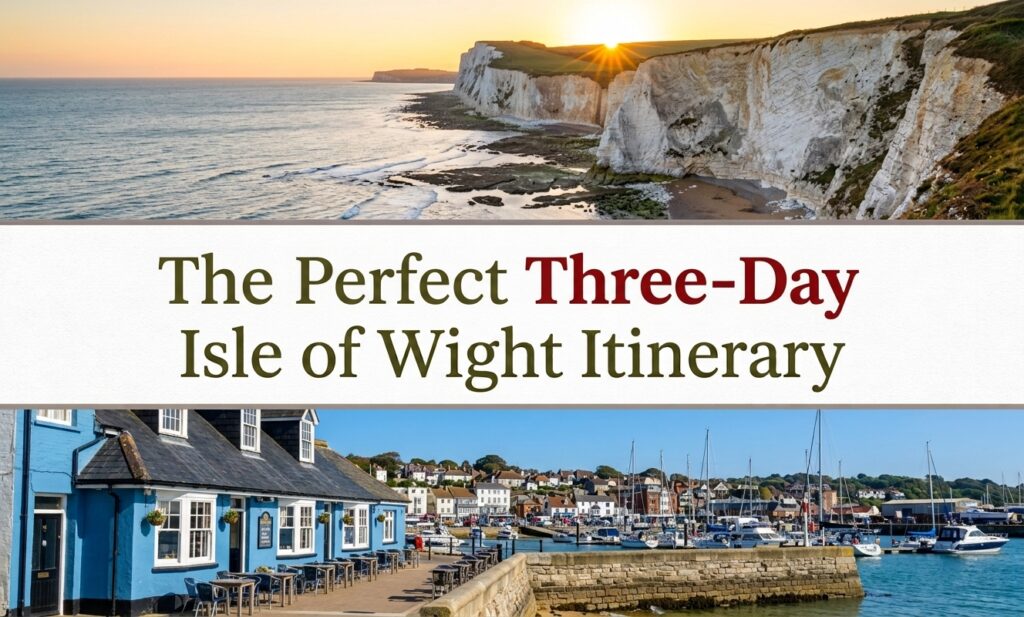
Use the second day for the Island’s western side. The Needles are among its best-known sights, with bright chalk stacks rising from the sea. The surrounding headland provides impressive views and several walking opportunities. Weather can change quickly on exposed ground, so take an extra layer.
Nearby Alum Bay is known for its coloured sands and views towards the Needles. It can become busy during school holidays, making an earlier visit worthwhile. Afterwards, travel to Freshwater Bay for a quieter stretch of coast. The cliffs and pebble beach create a very different mood from the beaches in the east.
Continue to Yarmouth for the afternoon. This small harbour town has historic streets, places to eat and a relaxed waterfront. Yarmouth Castle provides another link to the Island’s long coastal history. A gentle walk beside the water is a pleasant way to finish an active day.
Day three: history and Island life
Begin the final day at Carisbrooke Castle. Its walls have witnessed centuries of history, including the imprisonment of King Charles I. Allow time to walk around the battlements and enjoy the views. Families should also look out for the castle’s resident donkeys and seasonal activities.
Next, head towards Newport for lunch. As the Island’s main town, it offers a useful choice of cafés, restaurants and shops. It is also well placed for reaching several major attractions. This makes it a practical stop rather than merely a place to pass through.
Spend the afternoon at Osborne, Queen Victoria’s former Island home, if time allows. The house, grounds and private beach can fill several hours. Visitors with a strong interest in history may prefer to make this the focus of the whole day. Check admission and opening information before travelling.
Make the schedule your own
This itinerary is a framework, not a race. Families might swap a historic house for an animal attraction or extra beach time. Walkers may prefer to spend half a day on the coast path. Food lovers could build the route around farm shops, seafood and local produce.
Leave some unplanned space each day. A viewpoint, village shop or quiet cove may tempt you to stay longer than expected. Those unscheduled moments often become the best memories of a short break. Three days will not reveal the whole Island, but they can provide a wonderful introduction.
Check travel conditions, attraction hours and bookings shortly before you leave. Keep the first and final days flexible around your crossing. With a little preparation, you can see several sides of the Isle of Wight without feeling rushed. You may also leave with a list ready for your next visit.
Think about meal locations while arranging each day. Booking dinner near your accommodation avoids another drive after a full schedule. Lunch can remain flexible, particularly when a picnic suits the weather. Carry water and a snack because rural stops may not always be open.
Families can choose one priority for each day together. One person might choose a beach, another a castle and another an ice cream stop. This keeps the itinerary balanced and gives everyone something to anticipate. It also makes it easier to remove lower-priority activities when energy runs low.
Visitors with limited mobility should check individual access statements in advance. Historic sites, cliffs and older villages can include slopes, steps or uneven surfaces. Many locations offer accessible facilities, but the precise route matters. Calling ahead can answer questions that a general description cannot.
Photography is best planned around light without allowing it to dominate the trip. Morning often suits quieter seafronts, while late afternoon can soften views across the downs. Keep a waterproof pouch for a phone or camera. Stop only in safe places and never block a narrow road for a photograph.
Keep the final evening simple. Pack most luggage before dinner and review the return journey. This leaves the last morning free for breakfast or a short waterfront walk. A calm departure is a fitting end to three well-planned days.