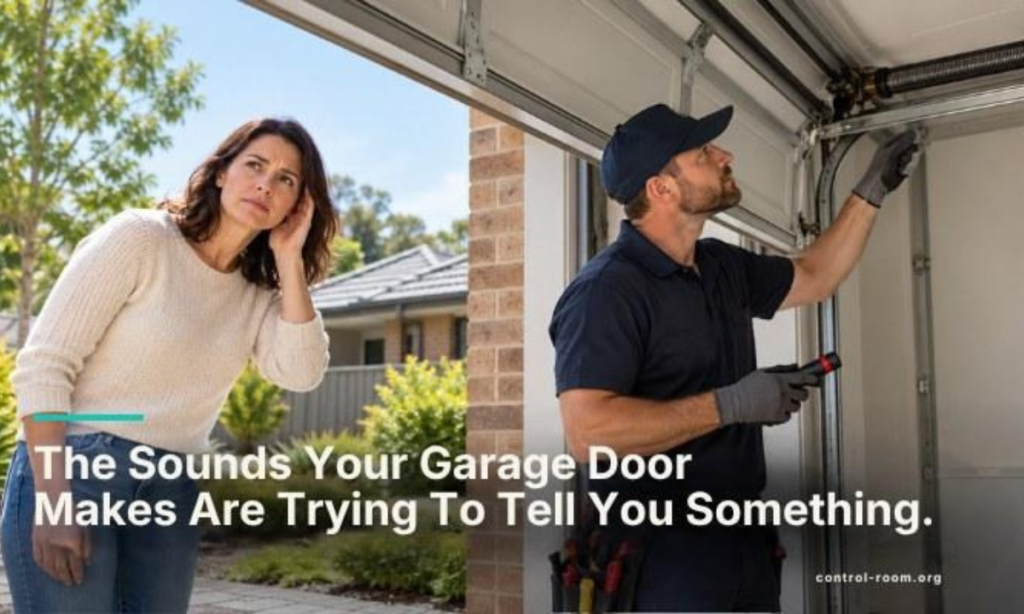

Has your garage door started sounding louder than it used to? Plenty of owners hear a noisy garage door and simply blame old age. Yet a fresh squeal or clunk is usually a warning sign of a worn roller, rattling bolt, or weakening spring.
As Control Room, a Brisbane company that installs, repairs, and inspects panel lift doors, we’ve tracked down squeals and clunks for over ten years. Many of the jammed doors we fix in Ipswich and Chermside started as a small noise the owner ignored for months.
Next, you’ll learn why gradual noise goes unnoticed, how a small fault spreads to the springs and motor, and when to book a check.
Is Your Noisy Garage Door Ageing or Developing a Fault?
In most cases, extra noise points to a hardware fault. A sectional door with tight fixings and greased rollers hums evenly through the full lift and close. That said, even a new door makes a low motor whirr, so listen for unusual noises like a creak that sharpens each month.
Honestly, if the same door sounds different from last winter, a part has worn down or come undone. Age alone rarely causes a change in sound, since loose hardware and dry moving parts usually do.
Around Ipswich, we often trace a clatter to loose screws on one hinge, which lets a panel knock against the panel below. Our technicians then tighten the screws and grease the hinge, which brings back quiet operation. The repair is quick once you book it. The problem is that most homeowners stop noticing the noise long before they think to call.
Garage Door Noise: Why Homeowners Stop Noticing It Over Time
Ever noticed how you stop hearing the fridge hum a day or two after it starts? Garage door noise fades from your attention the same way, because your brain filters out sounds it hears every day.
And because the sound changes slowly, a June creak can grow into a grinding noise by December without you noticing. No wonder most homeowners we visit in Wynnum and Chermside blame summer heat for the racket. Many have ignored the grinding for months.
Visitors, by contrast, usually pick up the sound first because their ears haven’t adjusted yet (though most are too polite to mention the racket). To hear the door the way a visitor does, switch the radio off as you press the remote control and listen to the opening.
If you pick up a scrape or thump during the opening, a worn part will already be putting strain on your springs and motor.
How Ignored Noise Leads to Bent Tracks and Broken Springs
That strain doesn’t stay in one place. Over time, the fault behind the noise pulls the whole door out of line.
Once the door sits crooked, tracks bend, and springs snap under the uneven load. For example, a dry roller can tilt one side of a panel, which twists the track slightly with every lift. Misaligned tracks eventually pinch the rollers, and the door can jam shut with your car stuck inside.
So let’s walk through the two parts that usually fail first: the rollers and the springs.
Worn Garage Door Rollers and Springs Get Louder Before They Fail
Rollers and springs give off warning sounds for weeks before they break. As their bearings wear down, worn-out rollers stop spinning and scrape along the track system.
Steel rollers usually outlast basic nylon ones, but steel creates metal-on-metal contact once the grease dries. Nylon rollers run quieter but wear out faster, so the choice comes down to lifespan versus noise.
Meanwhile, coiled torsion springs usually sit above the door and hold up the panels. They often ping as their spring tension fades. A trained technician should handle any spring adjustment, though (a snapping spring can cause serious injury).
A Strained Garage Door Motor Shortens Your Opener’s Life
Let’s look at what worn rollers and weak springs do to your motor. On a balanced door, the springs carry most of the weight (the motor simply guides the panels up and down).
An unbalanced door shifts the load onto the garage door motor instead. Every heavy lift wears the garage door opener’s gears, and belt drives or chain drives stretch under the strain.
Many automatic openers also stall halfway when the tracks sit out of line, since the rollers bind and the motor can’t push past them. When the opener finally burns out, the bill usually covers an urgent call-out plus a replacement drive unit.
Why Emergency Garage Door Repairs Cost More Than Planned Ones
With a planned repair, you keep full control of the timing, budget, and parts. A breakdown, by contrast, tends to hit at 7 am on a school day, when you’re already running late.
Planned and emergency repairs differ in three ways:
| Planned Repair | Emergency Repair | |
| Timing | A day that suits your week | Whenever the door fails |
| Call-Out Fees | Standard rates | After-hours or weekend surcharges |
| Scope of Work | Usually one part, like a roller | Often tracks, springs, and the motor together |
On the emergency side, after-hours fees combine with the extra damage that months of delay have caused, leaving you with a much larger bill. Most homeowners only end up weighing repair vs. replace because a cheap fix sat unbooked for months.
Ideally, though, annual servicing spots the fault before you need a repair at all.
Can a Garage Door Service Catch Problems Before Emergency Repairs?
Yes, regular garage door servicing catches most faults early, because a technician tests each part by hand while the wear is still minor. Here’s what our ControlRoom inspection covers on every sectional garage door:
- Tighten Loose Parts: Daily vibration shakes track brackets and other metal parts loose, so the panels shudder on the way up. Our team then tightens each fixing.
- Run a Balance Test: If the door drifts after we lift it halfway, the springs will need adjusting. A small tension tweak now prevents a snapped spring later.
- Check the Safety Sensors: Your opener’s infrared beams should stop and reverse the door the moment anything crosses its path. Faulty beams create safety risks, since the door can close on a bin, a bike, or the family dog.
For light maintenance between visits, clean grime off the tracks with a little methylated spirits on a rag. After that, wipe the hinges with an oily cloth to reduce garage door noise. Plus, springs and cables are no place for a DIY fix, so leave those to a professional technician. The last question, then, is when to book that visit.
Book Garage Door Repairs as Soon as the Noise Changes
The best time to call is within a week of the sound changing. You’d book the car in once a dashboard light flicks on, and a new noise from your door deserves the same urgency. A call within that first week usually means a quick adjustment. After a few months, the worn part strains the springs and tracks until the motor needs replacing.
The RACV notes that garages are a prime target for burglars, so a door that closes and locks properly is part of your home security as well. If your noisy garage door has picked up a new squeal or shudder, book an inspection or repair with the Control Room today. All installation and repair work comes with our three-year guarantee.