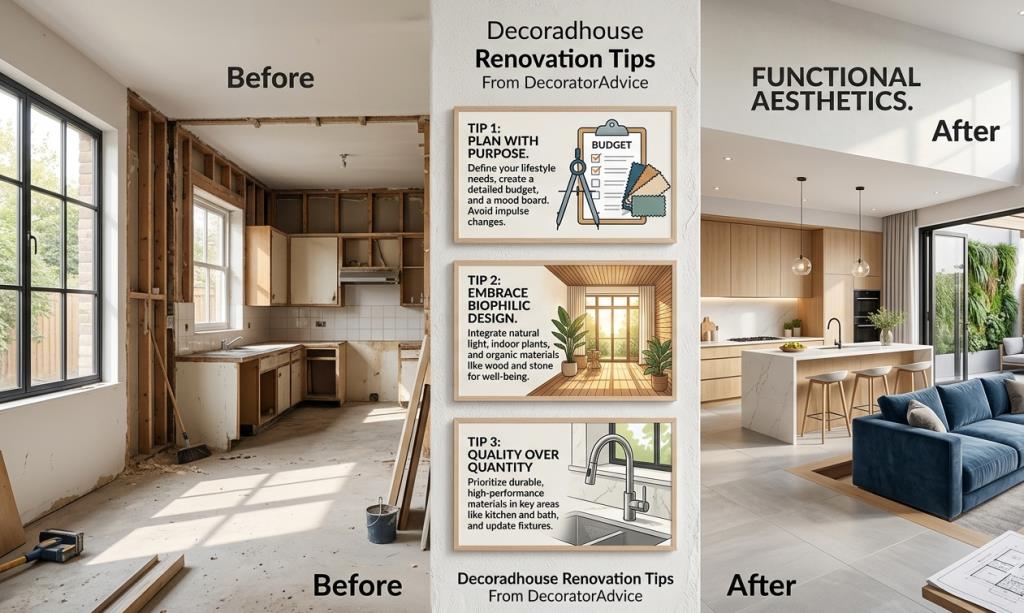

Decoradhouse renovation tips from decoratoradvice a home can be exciting, but it can also become overwhelming when there are too many decisions to make at once. From choosing the right colors and materials to setting a realistic budget and deciding which improvements matter most, every renovation requires thoughtful planning. A beautiful result does not necessarily come from spending the most money. It usually comes from making smart decisions that balance comfort, functionality, durability, and personal style.
The Decoradhouse renovation tips from DecoratorAdvice approach focuses on exactly that balance. Whether you are updating one room, refreshing an outdated interior, or planning a larger home renovation, the goal should be to create a space that looks attractive while working well for everyday life.
Renovation starts long before construction or decorating begins. With a clear plan, sensible budget, suitable materials, and a strong understanding of your home’s needs, you can avoid many of the common mistakes that make renovation projects expensive or stressful.
Why Good Renovation Planning Matters
A renovation is more than changing the appearance of a room. It is an opportunity to improve how your home functions and how you feel when you live in it. Before buying paint, furniture, flooring, or decorative accessories, think about what you want the renovation to accomplish. Perhaps your kitchen lacks storage, your living room feels cramped, your bedroom needs a calmer atmosphere, or your entire interior looks dated. Start by identifying the problem rather than immediately choosing a solution. Ask yourself:
- What is not working in the current space?
- What do I want to improve?
- Which changes are essential?
- Which changes are simply cosmetic?
- How much can I comfortably spend?
- How long can the renovation realistically take?
These questions create a foundation for better decisions. A renovation plan based on real needs is generally more successful than one based entirely on current trends.
Set a Realistic Renovation Budget
Budgeting is one of the most important parts of any home improvement project. Even a small renovation can become expensive when several minor costs appear unexpectedly. Create a budget before making major purchases. Include materials, labor, delivery fees, tools, professional services, and other project-related expenses. If the renovation involves electrical, plumbing, structural, or other specialized work, allow for professional assistance where appropriate.
It is also sensible to keep some money aside for unexpected expenses. Older homes, in particular, can reveal problems only after walls, floors, or fixtures are opened up. Instead of asking, “What can I buy with my entire budget?” ask, “Which improvements will provide the greatest value and usefulness?”
For example, improving poor lighting, storage, flooring, or an inefficient layout may have a greater impact on daily life than purchasing expensive decorative items. A good renovation budget should therefore prioritize function first, quality second, and decoration third.
Create a Room-by-Room Renovation Plan
Trying to renovate everything at once can make a project difficult to manage. A room-by-room plan helps you organize the work and control your spending. Start with the spaces that have the biggest functional problems. If your kitchen has poor storage or your bathroom has outdated fixtures, those issues may deserve priority over purely decorative improvements. Before starting each room, consider:
- The purpose of the room.
- Existing problems.
- Available space.
- Storage requirements.
- Lighting conditions.
- Color preferences.
- Materials and finishes.
- Furniture placement.
- Maintenance requirements.
- The overall connection to the rest of the home.
This approach helps prevent one of the most common renovation problems: creating attractive individual rooms that do not feel connected as a whole.
Read More: 50 Smart Home Ideas That Will Upgrade Your Lifestyle
Decoradhouse Renovation Tips for Better Interior Design
Decoradhouse renovation tips from decoratoradvice is to make the home feel cohesive without making every room identical. A consistent design language can come from repeating certain colors, materials, textures, shapes, or finishes. You might use warm wood throughout the home, repeat a particular metal finish, or maintain a similar neutral background while introducing different accent colors in individual rooms.
Choose a Balanced Color Palette
Color can dramatically influence how a room feels. Light and neutral colors can help smaller spaces appear more open, while deeper tones can create warmth and visual depth. Rather than selecting colors randomly, create a basic palette consisting of:
- A primary wall or background color.
- One or two complementary colors.
- An accent shade.
- Supporting neutral tones.
Test paint samples in the actual room before committing. Natural daylight, artificial lighting, flooring, and nearby furniture can all change how a color appears.
Think About Lighting Early
Lighting should not be treated as an afterthought. A well-designed room usually benefits from several layers of lighting. General lighting provides overall illumination, task lighting helps with specific activities, and accent lighting adds atmosphere or highlights architectural or decorative features.
For example, a kitchen may need bright task lighting over work surfaces, while a living room can benefit from a combination of ceiling lights, floor lamps, table lamps, and accent lighting. Good lighting can make an otherwise ordinary renovation feel considerably more polished.
Prioritize Functionality
Beautiful design becomes frustrating when it does not work in real life. Think about how people move through each room. Leave comfortable walking space, place frequently used items where they are easy to reach, and avoid filling every available area with furniture or decorations. The best interior design is not simply something that looks good in photographs. It should make everyday routines easier.
Renovation Tips for Different Areas of the Home
Every room has different requirements, so renovation decisions should reflect how each space is used.
| Home Area | Key Renovation Priorities | Design Considerations |
| Living Room | Layout, lighting, seating, storage | Comfort, balance, focal point |
| Kitchen | Workflow, storage, surfaces, lighting | Durability and easy maintenance |
| Bedroom | Comfort, lighting, storage, privacy | Calm colors and relaxing textures |
| Bathroom | Ventilation, fixtures, surfaces | Water resistance and practicality |
| Entryway | Storage, lighting, organization | Welcoming and uncluttered appearance |
| Home Office | Desk placement, lighting, storage | Productivity and comfort |
Living Room Renovation
The living room often serves multiple purposes, including relaxing, entertaining, watching television, reading, and spending time with family. Start with furniture placement. Avoid automatically pushing every piece against the wall. Depending on the room’s size, creating a more intentional seating arrangement can make the space feel warmer and more inviting.
A strong focal point can also help. This might be a fireplace, artwork, a feature wall, a distinctive piece of furniture, or another architectural element.
Kitchen Renovation
Kitchen renovation should focus heavily on practicality. Think about the relationship between preparation areas, cooking equipment, storage, and cleaning zones. Adequate counter space and accessible storage can make a bigger difference than purely decorative upgrades.
Choose surfaces that can withstand everyday use. Consider cleaning requirements before selecting finishes, hardware, flooring, and countertops.
Bedroom Renovation
A bedroom should support rest and relaxation. Soft textures, comfortable lighting, appropriate storage, and a restrained color palette can contribute to a more peaceful environment. Avoid overcrowding the room with unnecessary furniture. A simple, well-organized bedroom can feel more comfortable than a larger space filled with too many items.
Bathroom Renovation
Bathrooms need materials and fixtures that can handle moisture and frequent use. Ventilation is also important. When selecting finishes, think beyond appearance. Consider cleaning, durability, water exposure, and long-term maintenance.
A bathroom does not need elaborate decoration to look sophisticated. Consistent finishes, good lighting, attractive fixtures, and an uncluttered layout can create a refined result.
Choose Materials for Durability, Not Just Appearance
One of the biggest renovation mistakes is choosing materials solely because they look attractive. A material should suit the room and the way it will be used. Before making a purchase, consider:
- How often the surface will be used.
- How easily it can be cleaned.
- Whether it can handle moisture.
- How resistant it is to wear.
- How difficult repairs may be.
- Whether replacement parts are readily available.
- Whether the style will remain appealing over time.
For high-use areas, durability should usually be more important than a short-lived design trend. This does not mean every material needs to be expensive. It means you should understand where quality matters most and spend strategically.
How to Make a Renovated Home Feel More Expensive
Small improvements can have a significant visual effect when they are carefully selected. Consistent hardware, attractive lighting, quality-looking textiles, appropriate artwork, and uncluttered surfaces can make a home feel more finished. Proportion is particularly important. Furniture that is too large can make a room feel cramped, while furniture that is too small can make a large room feel disconnected.
Window treatments can also influence the appearance of a room. Properly positioned curtains or shades can make windows feel larger and create a more finished look. Another useful principle is to avoid decorating every corner. Empty space is not wasted space. It can give important furniture and decorative pieces room to stand out.
Avoid Common Home decoradhouse renovation tips from decoratoradvice Mistakes
Even a well-intentioned renovation can go wrong if planning is rushed. One common mistake is beginning work without a clear budget. Another is purchasing materials before measurements and design decisions are finalized. Other mistakes include:
- Ignoring the home’s existing architectural style.
- Choosing trends over long-term practicality.
- Underestimating installation costs.
- Forgetting about storage.
- Neglecting lighting.
- Making major layout changes without professional guidance when needed.
- Buying furniture before confirming room dimensions.
- Changing the plan repeatedly during construction.
- Focusing entirely on appearance while ignoring functionality.
A renovation does not have to be perfect to be successful. The key is to make informed decisions and understand the consequences of important changes before committing to them.
Balance Current Trends With Timeless Design
Home design trends can provide inspiration, but following every trend can quickly make a renovation feel dated. A better strategy is to use trends in areas that are easy and relatively affordable to change. Decorative accessories, artwork, cushions, smaller furnishings, and certain paint choices can be updated later.
For permanent or expensive elements, consider more timeless options. This creates a flexible interior. The foundation remains classic while smaller details can evolve as your taste changes.
When Should You DIY and When Should You Hire a Professional?
DIY projects can be rewarding and may help control costs, particularly for simple decorating tasks. Painting, assembling furniture, styling shelves, replacing certain decorative elements, or creating simple organizational systems may be suitable for capable homeowners.
However, some projects require specialized knowledge. decoradhouse renovation tips from decoratoradvice, Electrical work, significant plumbing changes, structural modifications, gas-related work, and other technical tasks should be approached carefully and handled by appropriately qualified professionals where required.
Before hiring someone, ask about their experience, previous work, estimated timeline, costs, and what is included in the service. The cheapest option is not always the best option. A professional who communicates clearly and understands the project can potentially prevent expensive mistakes.
A Practical Renovation Checklist
decoradhouse renovation tips from decoratoradvice, Before starting your renovation, work through this simple checklist:
- Define the purpose of the renovation.
- Identify the most important problems.
- Set a realistic budget.
- Keep an allowance for unexpected expenses.
- Measure spaces accurately.
- Create a room-by-room plan.
- Decide on a consistent design direction.
- Plan lighting and storage.
- Research materials carefully.
- Confirm professional requirements.
- Purchase only after measurements and specifications are confirmed.
- Review progress before moving to the next stage.
- Keep the finished design practical and uncluttered.
This simple preparation can make a major difference to the overall renovation experience.
Final Decoradhouse Renovation Tips From DecoratorAdvice
The most useful renovation advice is often surprisingly simple: plan carefully, spend intentionally, and design for the way you actually live. A successful renovation is not determined by how expensive the furniture is or how closely the finished home follows the latest trend. It is determined by whether the space feels comfortable, functional, durable, and genuinely suited to the people who use it.
Use your budget where it matters most. Prioritize structural and functional improvements before purely decorative upgrades. Choose materials based on both appearance and performance. Think about lighting from the beginning, and do not underestimate the value of good storage and thoughtful furniture placement.
Most importantly, avoid rushing decisions simply because you are excited to see the finished result. The best Decoradhouse renovation tips from DecoratorAdvice can be summarized in one idea: renovate with purpose. When every major choice has a reason behind it, your home is more likely to feel intentional rather than simply newly decorated.
Conclusion
Home renovation is an opportunity to make your surroundings more functional, comfortable, and personal. Whether you are making a few small updates or planning a complete transformation, the process becomes easier when you approach it with a clear strategy.
The strongest renovation decisions usually begin with practical questions: What does the home need? What does the household need? What can the budget realistically support? Which improvements will remain useful for years? From budgeting and material selection to lighting, room layouts, storage, and decoration, every decision contributes to the final result.
Decoradhouse renovation tips from DecoratorAdvice, you can approach your renovation with a more thoughtful mindset and create a home that is not only visually appealing but also comfortable, practical, and built around real everyday needs.
FAQs about decoradhouse renovation tips from decoratoradvice
Q1. What are the most important things to consider before renovating a home?
Ans: Start by identifying your renovation goals, setting a realistic budget, measuring the space, and determining which improvements are essential. It is also important to consider functionality, materials, lighting, storage, timelines, and whether specialized professional help is required.
Q2. How can I keep my renovation within budget?
Ans: Create a detailed budget before purchasing materials or beginning work. Prioritize essential improvements, compare material options, track expenses, and keep money available for unexpected costs. decoradhouse renovation tips from decoratoradvice, Avoid making frequent changes after work has started because changes can increase both material and labor expenses.
Q3. Should I follow current interior design trends?
Ans: Trends can provide useful inspiration, but they should not control every renovation decision. Consider using trends for easily replaceable items while choosing more timeless styles for permanent features, expensive finishes, flooring, and major fixtures.
Q4. Which home improvements usually make the biggest difference?
Ans: Improvements that solve everyday problems can have a major impact. Better lighting, improved storage, more functional layouts, durable surfaces, updated fixtures, and thoughtful furniture placement can transform a space without requiring excessive decoration.
Q5. How do I choose the right materials for a renovation?
Ans: Consider more than appearance. Decoradhouse renovation tips from decoratoradvice. Look at durability, maintenance, moisture resistance, cleaning requirements, expected usage, installation needs, and long-term appearance. A material that looks beautiful but requires excessive maintenance may not be the best choice for a busy household.
Q6. Is it better to renovate one room at a time?
Ans: For many homeowners, renovating one area at a time can make budgeting and project management easier. It can reduce disruption and allow you to learn from each stage before moving to another room. However, the best approach depends on the size and complexity of the renovation.
Q7. How can I make a small room look more spacious?
Ans: Use an uncluttered layout, appropriate furniture proportions, good lighting, and a restrained color palette. Mirrors and visually lighter furnishings can also contribute to a sense of openness. decoradhouse renovation tips from decoratoradvice, Most importantly, avoid filling the room with unnecessary furniture and accessories.